


Originally developed in the 1940s and 1950s, Insulated Concrete Forms( ICFs ) are cast-in-place, reinforced concrete wall shapes. After World War II, Swiss engineers began using treated wood blocks to hold cement walls together, and this was the genesis of the ICF. Later, chemical industries adapted the concept to create plastic foams. Later, Jean-Louis Béliveau developed an even more advanced version for his parents’ Florida property. As permanent wall supports, these forms allow for wiring and plumbing to be routed through them and serve as thermal and acoustical insulation.
Insulated Concrete Forms: What Exactly Is It?
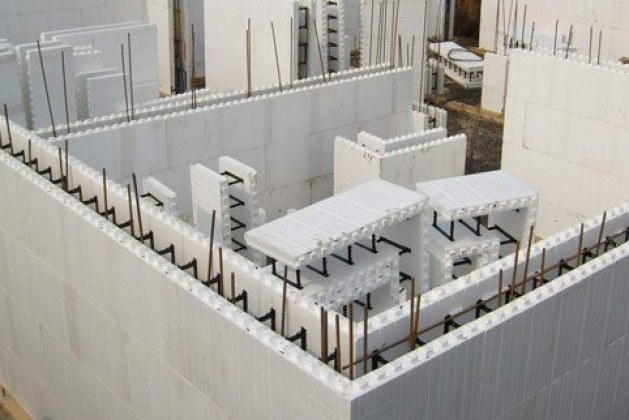
As the name suggests, Insulated Concrete Forms (ICF) is a construction method that utilises lightweight formwork (made of an insulating material) to support concrete walls while they are being poured and that is subsequently left in place as insulation.
Builders and building owners alike benefit from using insulated concrete forms.
- Owners are pleased:
- strong structures
- preparing for and surviving a catastrophe
- to mould, rot and mildew (below grade can require termite protection)
- ability to block sounds
- overall safety
- savings as a result of better energy use
Those who work in the construction and building industries enjoy:
- speedy and simple building
- flexibility
- easy transport and erection because to its modest weight.
- ability to work with a woodworker
- lower building costs and the capacity to satisfy stricter energy standards
Configurations and Systems of various sizes and components.
Different designs are available for insulation concrete form systems. Continuous concrete thickness can be achieved with “flat” technologies. When a wall is built using a “grid” approach, it has a waffle pattern, with heavier concrete in some places and thinner in others. “Post and beam” systems feature exactly that – concrete columns that are totally encased in foam insulation for horizontal and vertical support. Engineers, code-accepted, and field-tested are the hallmarks of all major ICF systems, regardless of their variances.
Connector or web separates the two faces of the insulation. On-site stacking of large preassembled blocks is a snap. Planks or planks can be shipped more compactly, but they must be built into formwork on the construction site. Expanded polystyrene is the most common type of foam (EPS). Stronger, but more expensive, is extruded polystyrene (XPS). Several products are manufactured from recycled foam or wood fibre as a reference to environmentally friendly construction. Plaster finishes can be applied directly to the blocks made from recycled materials.
What is Insulating Concrete Formwork Used For?
The permanent formwork used to contain ready-mixed concrete for the walls is made from twin-walled expanded polystyrene panels that are stacked.
The walls of the final structure will be completely insulated thanks to the insulated formwork that stays in situ. Because of its uniformity, it is also ideal for applying most finishes and custom cladding systems. Many types of insulated concrete formwork also include a flooring system.###